RAIZ leads the largest national R&D program in forest-based bioeconomy.
27/07/2023
With a total investment of €14.6 million and the involvement of a team of over 200 people, inpactus – innovative products and technologies derived from eucalyptus – was developed in co-promotion between The Navigator Company, RAIZ – Forest and Paper Research Institute, the University of Coimbra, and the University of Aveiro. It also involved partner institutions such as the University of Beira Interior, the University of Minho, Instituto Superior Técnico, NOVA University of Lisbon, the Iberian Nanotechnology Institute, the RISE Bioeconomy (Sweden) and Fraunhofer (Germany) R&D centers, and the spin-off Satisfibre. Over four years and nine months, the quality of inpactus's research and technological development has resulted in more than 37 patents submitted or in preparation, consolidating RAIZ Institute's leadership in the national industrial property registry. Innovation is equally evident in the 66 prototypes and 114 proof-of-concept projects generated by the consortium, as well as in the innovative and distinctive products created. Of these, at least four are already in the commercialization phase – three products of toilet paper and another of kraftliner packaging paper produced from high-yield pulp – but also eight potential new products and businesses in the field of forest-based bioeconomy.
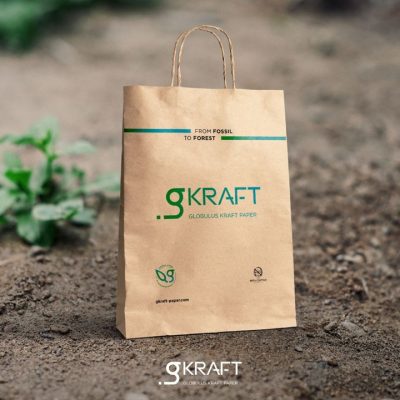
Among the multiple results of this project, the development of an innovative high-yield pulp production process should also be highlighted. This was the starting point for one of the most important launches in Navigator's recent history: the new range of packaging papers, gKraf, offering an alternative to fossil-based products such as plastic. Furthermore, it gave rise to innovative materials already in the commercialization or pre-commercialization phase for the hygiene and health market, such as tissue products with additives – perfumes, softeners or antibacterials.
In the context of a circular bioeconomy, there are also numerous examples of project results, highlighting the enormous potential of innovative products derived from eucalyptus forests. For example, this species has enabled the development of a new generation of bioproducts, such as cellulose-based biocomposites and bioplastics, with potential applications in industries as diverse as plastic injection and molding, filaments for 3D printing, and the textile industry. But that's not all. Bioactive products and essences derived from forest biomass also have potential applications in the pharmaceutical, cosmetic and hygiene product sectors, as ingredients in animal feed, or in nutraceuticals. In this last application, benefits have already been proven at various levels, including anti-inflammatory action, anti-aging effects on the skin, and prebiotic activity.
There are also other promising projects in the industrial demonstration phase, such as new ecological mortars and cements incorporating ash from biomass boilers, as well as applications of lignin, a byproduct of the industrial process, for use in polyurethane foams, adhesives, and composites. Among the results, biofuels from forest biomass waste, through different technologies, should also be highlighted. This is, therefore, a project that transcends the boundaries of science and economics, extending its influence to sustainability and the quality of life of future generations, and highlighting the importance of planted forests and eucalyptus globulus as an excellent raw material.
 News
News